
Bench Center
12 από 12 products
Filters


MarStand 818
Bench Centre
From Original price €0,00
Original price
€0,00
From €1.205,00€1.494,20
without VAT
From €1.205,00€1.494,20
Current price
€1.205,00€1.494,20
5-8 Working days
The MarStand 818 is a radial displacement measuring system with center support, suitable for eccentricity tests of shafts between two points. It in...
View full details
MarStand 818 P
Shaft and Crankshaft Inspection Table with V-Support
From Original price €0,00
Original price
€0,00
From €1.075,00€1.333,00
without VAT
From €1.075,00€1.333,00
Current price
€1.075,00€1.333,00
5-8 Working days
Technical Specifications Type: 818 P V-support height: 70 mm (4622260), 120 mm (4622262) Diameter range: 5–20 mm (4622260, 4622261), 5–45 mm ...
View full details
MarStand 818 R
Shaft and Crankshaft Inspection Table with Roller Support
From Original price €0,00
Original price
€0,00
From €1.146,00€1.421,04
without VAT
From €1.146,00€1.421,04
Current price
€1.146,00€1.421,04
5-8 Working days
Technical Specifications Type: 818 R Support roller height: 65 mm (4622250), 100 mm (4622252) Diameter range: 3–30 mm (4622250, 4622251), 4–6...
View full details

4721
Bench Centre
From Original price €0,00
Original price
€0,00
€1.429,00€1.771,96
without VAT
From €1.429,00€1.771,96
Current price
€1.429,00€1.771,96
Upon request
Specifications Code/Model: 4721-75A Runout accuracy: 2μm Center height (H): 40mm Distance between two centers (D): 35-100mm Center diame...
View full details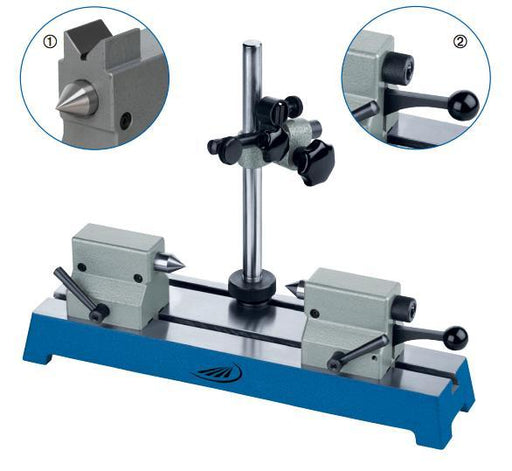

0780
Bench Centre
From Original price €0,00
Original price
€0,00
From €822,00€1.019,28
without VAT
From €822,00€1.019,28
Current price
€822,00€1.019,28
Upon request
Model Finely ground surface, flatness tolerance according to DIN 876-2 With two adjustable tailstocks Left tailstock with fixed centre Right ...
View full details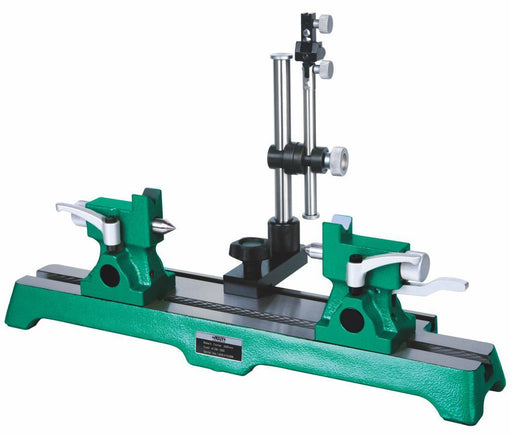
4720
Bench Centre
From Original price €0,00
Original price
€0,00
€3.406,00€4.223,44
without VAT
From €3.406,00€4.223,44
Current price
€3.406,00€4.223,44
Upon request
Hardened cast-iron guide surface Supplied with V slot/center tailstocks and roller tailstocks V slot for cylinder Ø4 ~ 22mm Roller for cylinder Ø5...
View full details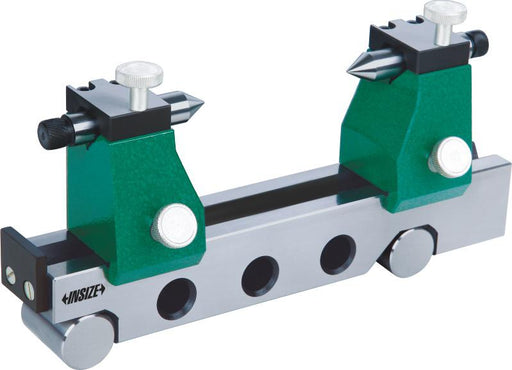
4157-200
Sine Bench Center with Sine Bar with Centers
From Original price €0,00
Original price
€0,00
From €1.300,00€1.612,00
without VAT
From €1.300,00€1.612,00
Current price
€1.300,00€1.612,00
5-8 Working days
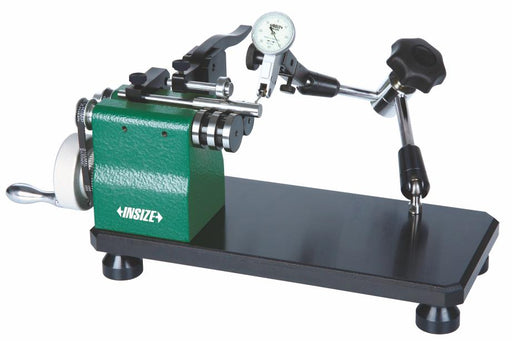
Check taper or runout of taper bars Sine bar accuracy (α=30°): ±5 seconds.
4725
Shaft and Crankshaft Inspection Table with Rollers
From Original price €0,00
Original price
€0,00
From €1.325,00€1.643,00
without VAT
From €1.325,00€1.643,00
Current price
€1.325,00€1.643,00
5-8 Working days
Specifications Type: Concentricity gage / inspection table with rollers Accuracy: 2 μm Bearings: ball bearing (for support/rolling) Dial t...
View full details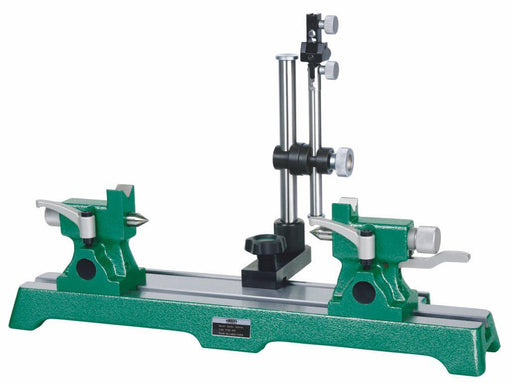
4723
Bench Centre
From Original price €0,00
Original price
€0,00
€7.269,00€9.013,56
without VAT
From €7.269,00€9.013,56
Current price
€7.269,00€9.013,56
Upon request
Specifications Code: 4782-300 Guide surface: hardened cast-iron guide surface Column: movable column V-slot: for cylinders Ø4~Ø22mm Para...
View full details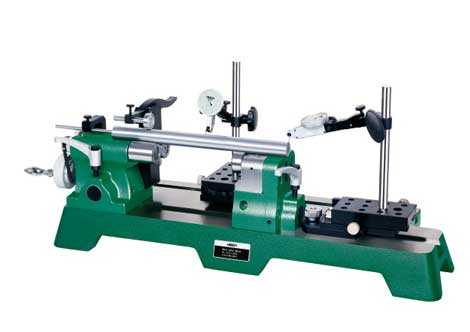
4733
Shaft Inspection Table
From Original price €0,00
Original price
€0,00
From €8.018,00€9.942,32
without VAT
From €8.018,00€9.942,32
Current price
€8.018,00€9.942,32
Upon request
Specifications Type: Bench centers (shaft inspection bench) Runout accuracy: 2 μm Center height (H): 90 mm Distance between centers (D): 3...
View full details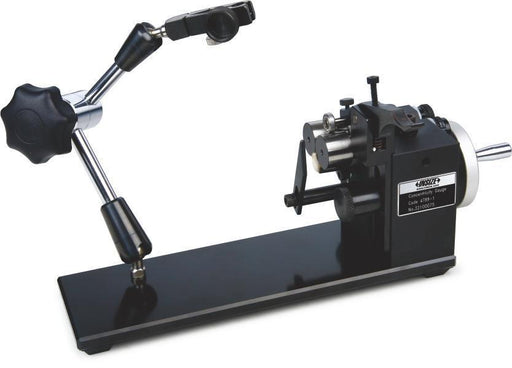
4789
Shaft and Crankshaft Inspection Table with Rollers
From Original price €0,00
Original price
€0,00
From €1.201,00€1.489,24
without VAT
From €1.201,00€1.489,24
Current price
€1.201,00€1.489,24
5-8 Working days
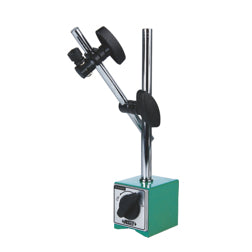
Accuracy 2μm Optional accessory: dial test indicator, mini magnetic stand (code 6224-40).
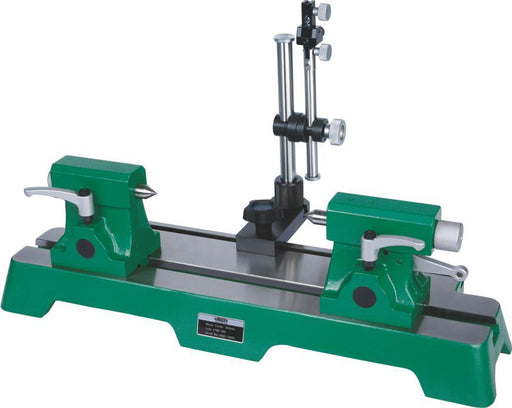
4788
Shaft and Crankshaft Inspection Table up to 1000mm with Centers
From Original price €0,00
Original price
€0,00
From €3.587,00€4.447,88
without VAT
From €3.587,00€4.447,88
Current price
€3.587,00€4.447,88
5-8 Working days
Vertical parallelism: 0.01mm Horizontal parallelism: 0.01mm Hardened cast-iron guide surface Movable column.
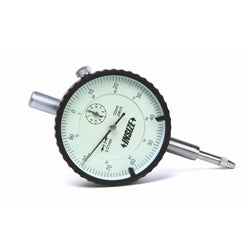
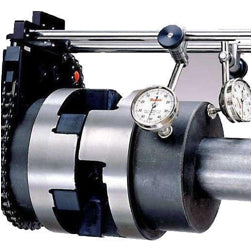
Bench centers are precision inspection setups used to verify concentricity, runout and alignment of cylindrical workpieces supported between centers. They are typically paired with a dial indicator to check shafts and turned parts before or after machining.
Available in multiple between-centers lengths and center heights, with cast-iron or steel bases, leveling feet, and options for live or dead centers. Select models from Insize, Mahr & Preisser.
Well suited for machine shops, toolrooms and QC areas where rigidity, low friction and repeatable readings matter.


Manufacturers


