CODEK 49 AD
CODEK 49 AD
Dial Indicator
Availability & price
| Code | Travel | Reading | Diameter | Availability | excl. VAT | incl. VAT | Certificate | Cart |
|---|---|---|---|---|---|---|---|---|
| K 49 AD | +/-0.1 | 0.001 | 40 | 1 in stock |
€166,00
|
€205,84
|
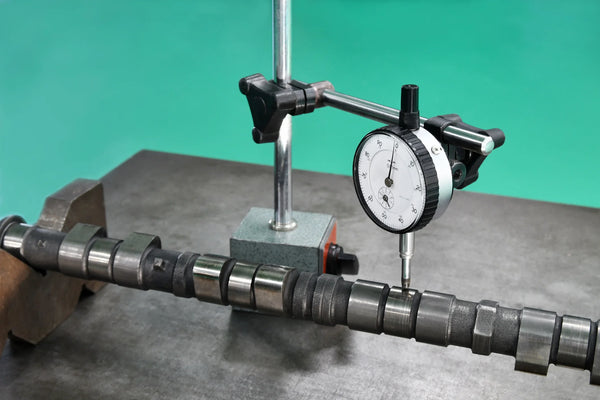
Model K 49 AD features a water-protected dial casing. The transparent front cover, made from durable plastic, provides a good seal for the dial casing, conforming only to protection class IP 53. Another advantage of this design is that the anti-reflective coating on the front cover reduces shadows on the dial face and makes model K 49 AD easy to read.
Dial Test Indicator K 49 AD
Reading 0.001 mm
Range 0.2 mm
Dial Reading 0-100-0
Bezel-Ø 40 mm
Form to DIN 2270 A
Dimensions and accuracy according to DIN 2270 A

Measuring force 0.15N ±20%
Length of contact point 12.8 mm
Swiveling range of contact point at 90° to the scale 240°
Dimensioned drawing
Complementary products
Frequently bought together


Official distributor
Kafer
Dial & Centering Indicators
You're viewing one product from this category. Browse the full range.