Skip to content
2102231624 - Δωρεάν μεταφορικά άνω 50€ - Τιμές χωρίς ΦΠΑ
2102231624 - Δωρεάν μεταφορικά άνω 50€

Dial Indicators

In the field of mechanical engineering, the dial indicator, also known as a clock gauge, is the instrument used for high-precision measurements of small distances (travel), amplifying them so they become more visible.

Indicators are divided into analog and digital. There are also centering indicators used for centering machine tools, checking eccentricity, and checking ovality.

The Latin name (Dial Indicator) comes from the concept that it shows the user lengths that cannot be distinguished with the naked eye (for example, a small height difference between two flat surfaces, a slight reduction in concentricity between two cylinders, or other small physical deviations).

Dial indicators have the appearance of a common clock. They are also used for measuring tolerances on machined parts, for checking beam flatness, and generally for measurements involving small deviations.

A dial indicator is characterized by various technical specifications:

  • Its travel range (0-5mm, 0-10mm, 0-30mm etc.)
  • Its resolution (0.01mm, 0.001mm etc.)
  • Its size (its diameter Ø40mm, Ø58mm etc.)
  • The number of revolutions of the main pointer per mm of travel
  • The secondary pointer that counts the number of revolutions of the main pointer.
  • Whether it is shockproof "shockproof" (more durable internal mechanism for resistance to wear over time).
  • Whether it is Waterproof "Waterproof" with IP protection
  • Comparator type (readings ±0.4mm)

Applications

  • For checking tolerances on brake discs. Typically 0.05mm or less.
  • For quality control in production.
  • In the machine shop for calibration and setup of machines (e.g. milling machine centering).
  • For centering the workpiece to be machined in a lathe chuck.
  • In various applications that require precision measurements outside the machine shop, such as geology, physics, etc.

Screw clamping on an indicator with a straight back (Stem mounting)

Notes:

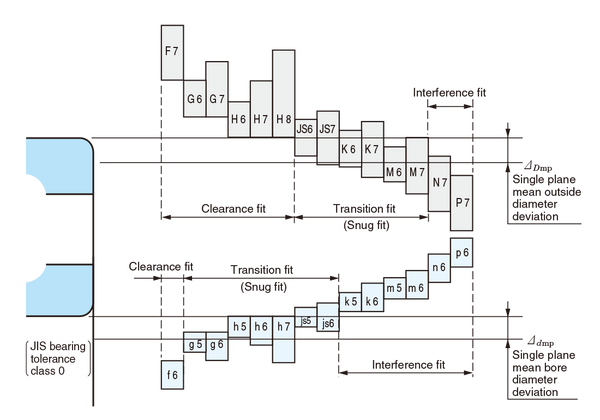
  • Hole tolerances for the stem Ø8G7(±0.005-0.02mm)
  • Special care is required when tightening. Excessive tightening hinders the movement of the plunger, thus creating measurement error.

Screw clamping on an indicator with a back (lug) (Lug mounting)

Notes:

  • To minimize cosine effect error (cosine effect error), the plunger is recommended to be positioned in line with the measurement.

Importance of positioning

If the measurement is taken in a horizontal position or even upside down, the measuring force of the contact point is naturally lower. Therefore, checking the repeatability of the measurements is required.

Maintenance

  • Do not use lubricants (oil) for the plunger. Oil tends to collect dust, making movement more difficult.
  • If the movement is not smooth, use a cloth with alcohol.
  • Before taking any measurement, make sure that the movement is smooth up and down.

Cosine Effect error (Cosine Effect)

The measurement will have an error if the direction of the required measurement does not coincide with the direction of the plunger. This error is minimized by adjusting the plunger so that the angle θ is minimized.