







































































































































































Johansson Gauge Blocks

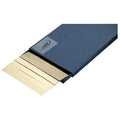
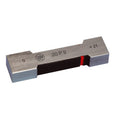
The gauge blocks, inspection blocks (also known as Gage blocks, Johannson gauges) are a system for building up various lengths with high accuracy. A gauge block is a metal or ceramic block that has been machined and lapped accurately to a specific thickness. Gauge blocks are supplied in sets with a range of standardized lengths. In use, the blocks are stacked so as to build up the required length.
The blocks are joined together by a process called wringing, which results in their flat surfaces adhering to each other. Only a small number of blocks can be used to create many precise lengths over a wide range.

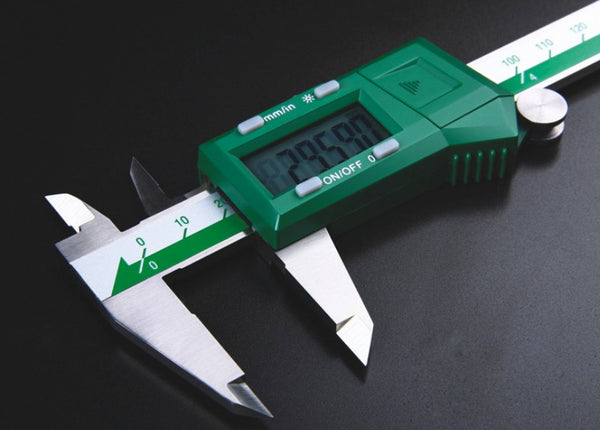
Gauge blocks were invented in 1896 by the Swedish engineer Carl Edvard Johansson. They are used as a reference for calibrating measuring equipment used in machine shops, such as micrometers, calipers, dial indicators and many others. Gauge blocks are the primary means of length standardization used by industry.
Use of gauge blocks
- To build up a stack from multiple gauge blocks.
- Use the minimum possible number of blocks.
- Start the build-up from the thinnest blocks.
- Clean the blocks carefully from dust.
- Check for any contamination with the help of optical parallels.
- By gently sliding the optical parallel on the block, interference lines should appear. If not, it most likely needs cleaning.

- Apply a very small amount of oil and gently clean the block.
- Bring into contact the faces of the blocks to be joined. This is done by any of the 3 methods below.

Grades
Recommended Grade
- Grade K: Primary standard as an absolute basic laboratory standard.
- Grade 0: For testing measuring devices and manufacturing high-accuracy gauges.
- Grade 1: For testing inspection gauges, setting measuring instruments, and as a working dimension.
- Grade 2: Setting and working dimensions for production.
Grade Deviation from Nominal
Length (μm)
00 (0.05 + 0.0001L)
0 (0.10 + 0.0002L)
1 (0.20 + 0.0004L)
2 (0.40 + 0.0008L)
Where L is the block nominal length in millimeters.
Thermal expansion of a 100mm gauge block
The graph below shows the expansion caused in a 100mm gauge block due to handling with bare hands.