Skip to content
2102231624 - Δωρεάν μεταφορικά άνω 50€ - Τιμές χωρίς ΦΠΑ
2102231624 - Δωρεάν μεταφορικά άνω 50€
Non-Destructive Testing

Coating Thickness Gauges

1 product
Φίλτρα
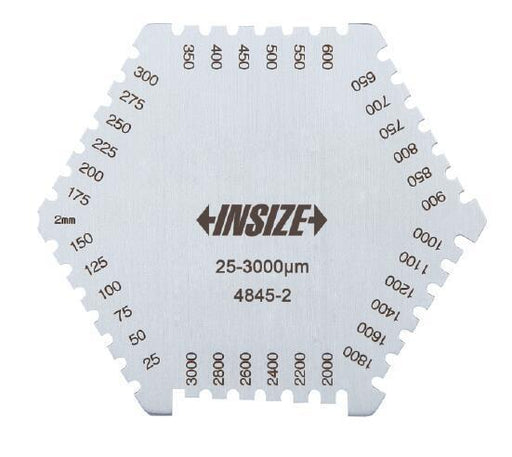
Εξαγωνικό παχύμετρο υγρού φιλμ Insize 4845-2, μεταλλικό με χαραγμένη κλίμακα 25–3000 μm
Best Seller
Liquid Film Coating Thickness Gauges
4845

Liquid Film Coating Thickness Gauges

Translation missing: en.product_price.item.price.range_html
Original price €0,00
from €30,10€37,32
from €30,10€37,32
Current price €30,10€37,32
Available

Made of stainless steel.

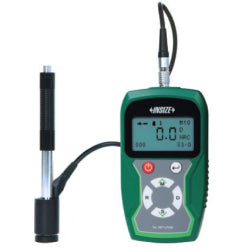
Coating thickness gauges are instruments for verifying paint and coating thickness, enabling fast, repeatable measurements on ferrous and non‑ferrous metal substrates and, depending on the method, on other materials. They are used for plating, galvanizing, anodizing and powder coating inspection.

Available in magnetic induction (Fe), eddy current (NFe), combined Fe/NFe and ultrasonic versions, with digital display, memory, statistics, limit alarms and calibration using reference foils/standards. Options from Insize, PCE Instruments & Erichsen.

Well suited for QC in paint shops, surface treatment lines, automotive work and maintenance where documented thickness and consistent results are required.

Coating Thickness Gauges
Wiki

Coating Thickness Gauges

The coating thickness gauges (coating thickness gauges) are non-destructive testing instruments that measure the thickness of layers such as paint, varnish, or galvanizing on metal surfaces. Their operation is based on the principles of magnetic induction (for ferrous substrates) and eddy currents (eddy currents) for non-ferrous metals such as aluminum.

  • Applications: Essential in the automotive industry for repaint inspection, in shipyards, anodizing, and corrosion protection industries.
  • Features: They have an integrated or external sensor (probe), automatic substrate recognition (F/NF) and high accuracy at the micrometer ($\mu m$) level.
  • Advantages: They allow verification of quality specifications without causing any damage to the product’s final surface.
Read More