
Coating Thickness Gauges
1 από 1 product
Data Out
Software
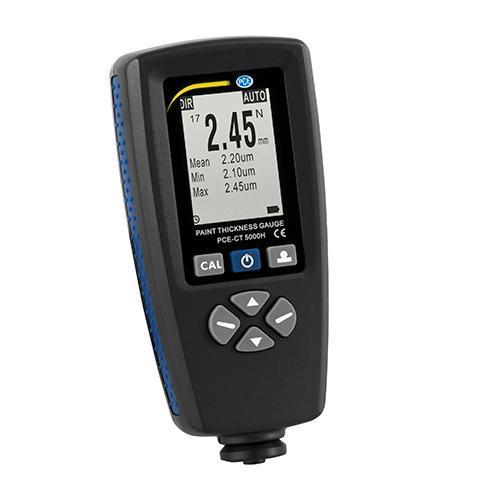

PCE-CT 5000H
Caliper Coating - Painting - Ferrous & Non Ferrous for heat-resistant paints 5000 μm


Translation missing: en.product_price.item.price.range_html
Original price
€0,00
€468,00€580,32
without VAT
From €468,00€580,32
Current price
€468,00€580,32
Available
Sensor Type F and Type N Type F Measuring range 0 ... 5000 μm / 0 ... 5 mm / 0 ... 196 mm Measurement accuracy ± (2% + 1 μm) Rea...
View full detailsCoating thickness gauges are instruments for verifying paint and coating thickness, enabling fast, repeatable measurements on ferrous and non‑ferrous metal substrates and, depending on the method, on other materials. They are used for plating, galvanizing, anodizing and powder coating inspection.
Available in magnetic induction (Fe), eddy current (NFe), combined Fe/NFe and ultrasonic versions, with digital display, memory, statistics, limit alarms and calibration using reference foils/standards. Options from Insize, PCE Instruments & Erichsen.
Well suited for QC in paint shops, surface treatment lines, automotive work and maintenance where documented thickness and consistent results are required.



Manufacturers
