
Metal Hardness Testers
4 από 4 products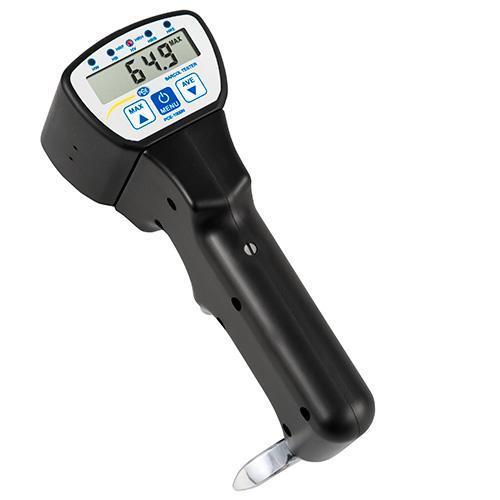

PCE-1000N
Portable Barcol Hardness Tester for Aluminum
Translation missing: en.product_price.item.price.range_html
Original price
€0,00
€1.166,00€1.445,84
without VAT
From €1.166,00€1.445,84
Current price
€1.166,00€1.445,84
Available
Measurement parameters Barcol (HBA)Brinell (HB)Vickers (HV)Webster (HW)Rockwell (HRB / HRE / HRF / HRH) Measuring range 0 ... 100 HBA / 25 ...
View full details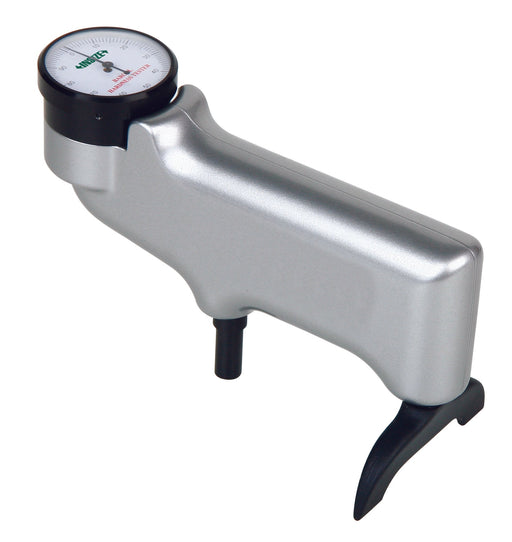

ISHB-B300
Portable Barcol Hardness Tester for Aluminum
Translation missing: en.product_price.item.price.range_html
Original price
€0,00
€1.651,00€2.047,24
without VAT
From €1.651,00€2.047,24
Current price
€1.651,00€2.047,24
5-8 Working days
Features: For measuring the hardness of thick pieces made of pure aluminum, aluminum alloy, fiber-reinforced plastic, hard plastic, etc. Measurem...
View full details
HDT-DB337
Digital portable Barcol hardness tester for aluminum-plastics
Translation missing: en.product_price.item.price.range_html
Original price
€0,00
€1.432,00€1.775,68
without VAT
From €1.432,00€1.775,68
Current price
€1.432,00€1.775,68
Available
Technical Specifications Hardness range: 0~100HBa Effective range: 40~90HBa (equivalent to 25~135HBW) Reading: 0.1HBa Accuracy: ±2.0HBa (...
View full details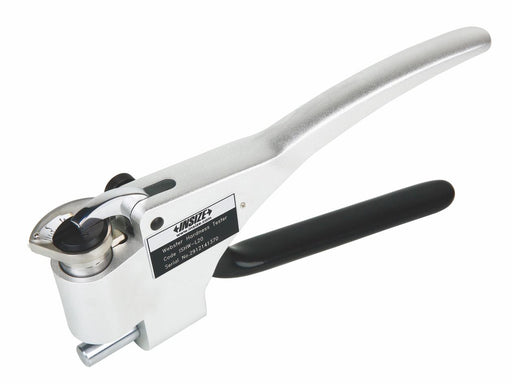
ISHW-L20
Portable Hardness Tester for Aluminum Profiles
Translation missing: en.product_price.item.price.range_html
Original price
€0,00
From €2.136,00€2.648,64
without VAT
From €2.136,00€2.648,64
Current price
€2.136,00€2.648,64
5-8 Working days
Features: - General purpose application for aluminum alloy - Hardness range: 0 ~ 20HW - Minimum reading: 1HW - Accuracy: ± 0.5HW (at 5 ~ 17HW) - Fo...
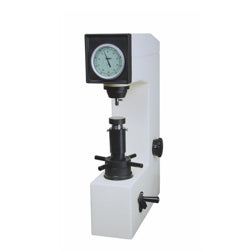
View full detailsMetal hardness testers are inspection instruments that measure the hardness of metallic materials by evaluating resistance to indentation or impact and the resulting permanent deformation. They are used for quality control, heat-treatment verification, and surface condition assessment.
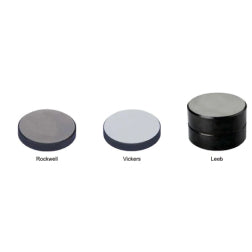
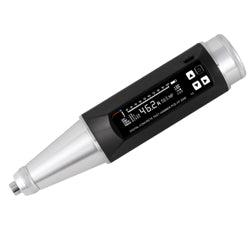
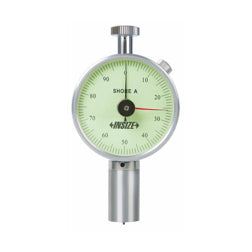
Available in portable and bench models, with multiple scales/methods (e.g., Leeb, Rockwell, Brinell, Vickers), options for curved or hard-to-reach surfaces, plus data logging and output features. Choices from Insize & PCE Instruments.
Well suited for machine shops, steel processing, maintenance, and field inspections—select based on method, accuracy, and the material range you need.

Manufacturers

