
Standard Weights
12 από 12 products
Class (Ακρίβεια)
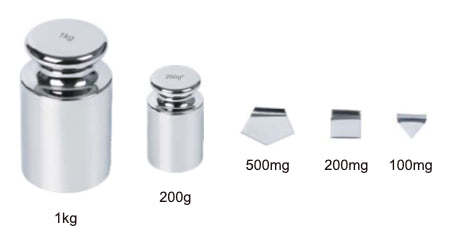

8911-M1C
Standard Weights - Chrome-Plated Steel + Plastic Case


Translation missing: en.product_price.item.price.range_html
Original price
€0,00
From €9,40€11,66
without VAT
From €9,40€11,66
Current price
€9,40€11,66
Available
The standard weights include a calibration certificate from the manufacturer.
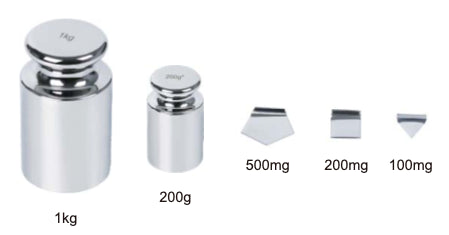
8911-M1
Standard Weights - INOX + Plastic Case

Translation missing: en.product_price.item.price.range_html
Original price
€0,00
From €6,90€8,56
without VAT
From €6,90€8,56
Current price
€6,90€8,56
Available
The standard weights include a calibration certificate from the manufacturer.
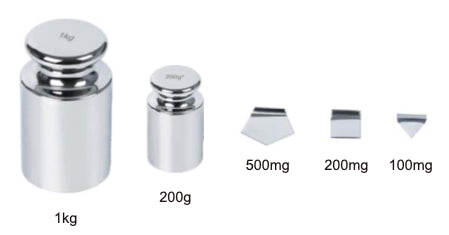
8911-F2
Standard Weights - INOX + Plastic Case

Translation missing: en.product_price.item.price.range_html
Original price
€0,00
From €7,20€8,93
without VAT
From €7,20€8,93
Current price
€7,20€8,93
Available
The standard weights include a calibration certificate from the manufacturer.
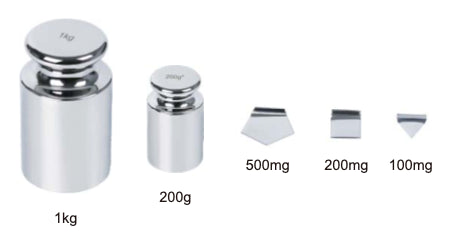
8911-F1S
Standard Weights - INOX + Plastic Case

Translation missing: en.product_price.item.price.range_html
Original price
€0,00
From €8,30€10,29
without VAT
From €8,30€10,29
Current price
€8,30€10,29
Available
The standard weights include a calibration certificate from the manufacturer.
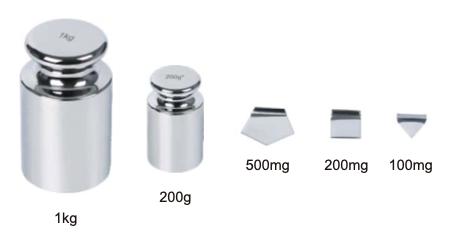
8911-E2
Standard Weights - INOX + Plastic Case

Translation missing: en.product_price.item.price.range_html
Original price
€0,00
From €32,10€39,80
without VAT
From €32,10€39,80
Current price
€32,10€39,80
Available
The standard weights include a calibration certificate from the manufacturer.
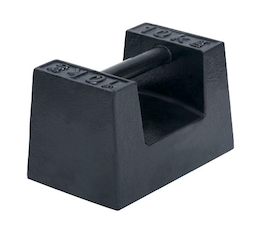
8913
Cast Iron Standard Weights M1

Translation missing: en.product_price.item.price.range_html
Original price
€0,00
From €38,50€47,74
without VAT
From €38,50€47,74
Current price
€38,50€47,74
Available
Specifications Type: Cast iron calibration weight Accuracy class: M1 Standard/Tolerances: OIML R111-2004 Available nominal masses (series)...
View full details
8912-F1
Standard weights - INOX Class F1 + Aluminum case
Translation missing: en.product_price.item.price.range_html
Original price
€0,00
From €125,00€155,00
without VAT
From €125,00€155,00
Current price
€125,00€155,00
By order
Standard weights include a calibration certificate from the manufacturer.

8912-F2
Standard weights - INOX Class F2 + Aluminum case
Translation missing: en.product_price.item.price.range_html
Original price
€0,00
From €97,00€120,28
without VAT
From €97,00€120,28
Current price
€97,00€120,28
5-8 Working days
Standard weights include a calibration certificate from the manufacturer.

8912-M1
Standard weights - INOX Class M1 + Aluminum case
Translation missing: en.product_price.item.price.range_html
Original price
€0,00
From €86,00€106,64
without VAT
From €86,00€106,64
Current price
€86,00€106,64
5-8 Working days
The standard weights include a calibration certificate from the manufacturer.

8914-F1
Standard weights - Class F1
Translation missing: en.product_price.item.price.range_html
Original price
€0,00
From €25,70€31,87
without VAT
From €25,70€31,87
Current price
€25,70€31,87
By order
Standard weights include a calibration certificate from the manufacturer.

8914-F2
Standard weights - Class F2
Translation missing: en.product_price.item.price.range_html
Original price
€0,00
From €25,70€31,87
without VAT
From €25,70€31,87
Current price
€25,70€31,87
By order
Standard weights include a calibration certificate from the manufacturer.

8914-M1
Standard weights - Class M1
Translation missing: en.product_price.item.price.range_html
Original price
€0,00
From €25,70€31,87
without VAT
From €25,70€31,87
Current price
€25,70€31,87
Available
Standard weights include a calibration certificate from the manufacturer.
Standard weights are traceable reference masses used to calibrate and verify precision balances and industrial scales, aligned with OIML accuracy classes. They support measurement traceability and consistent results in quality control and metrology workflows.
Available as sets or individual pieces, in E, F and M classes, with material options (stainless steel, nickel-plated), different shapes (cylindrical, knob/handle) and protective cases. Options from Insize for lab and shop-floor use.
When selecting, match the weight class to your instrument’s required tolerance, consider the environment, and ensure proper handling and storage to minimize wear and contamination.

Manufacturers
