
Ultrasonic Thickness Gauges
4 από 4 products
Data Out
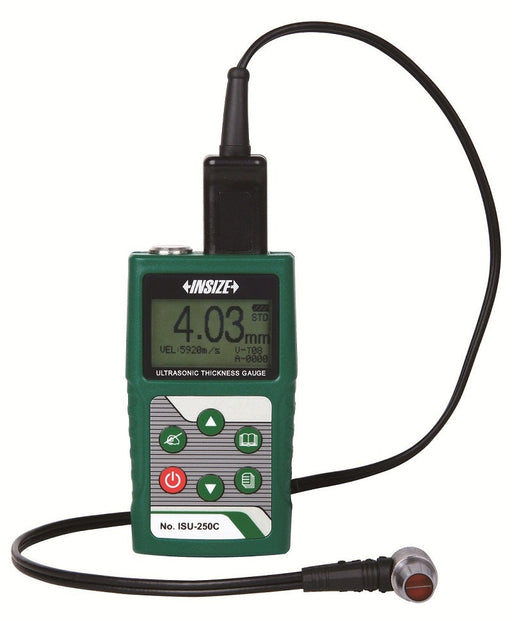

ISU-250C
Ultrasonic Caliper - Accepts Extra Sensors

Translation missing: en.product_price.item.price.range_html
Original price
€0,00
€1.379,00€1.709,96
without VAT
From €1.379,00€1.709,96
Current price
€1.379,00€1.709,96
By order
Reading: 0.01mm (range<100mm), 0.1mm (range≥100mm) Repeatability: 0.03mm (range<100mm), 0.1mm (range≥100mm) Speed: 1000-9999 m/s Accuracy: ...
View full details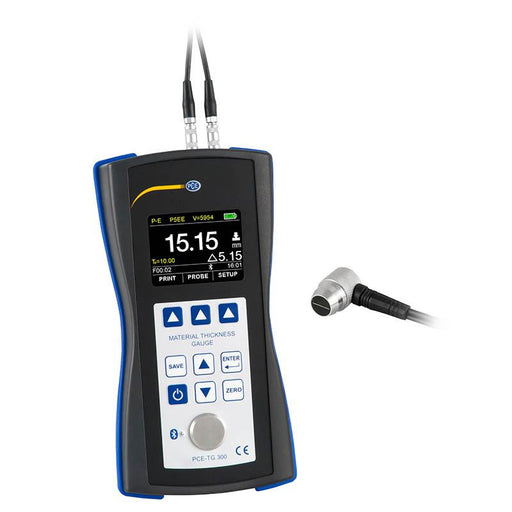

PCE-TG 300-P5EE
Ultrasonic Caliper (ignores paint)
Translation missing: en.product_price.item.price.range_html
Original price
€0,00
€1.433,00€1.776,92
without VAT
From €1.433,00€1.776,92
Current price
€1.433,00€1.776,92
Available
Sensor PCE-TG-P5EE Measuring range PE: 2 ... 600 [mm] / 0.078 ... 23.62", EE: 2.5 ... 100 [mm] / 0.098 ...3.937" Minimum pipe diameter ...
View full details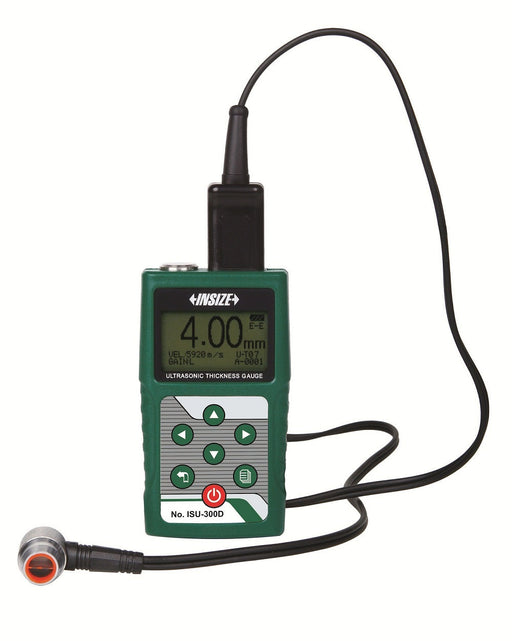
ISU-300D
Ultrasonic Caliper - Through Coating (Ignores Paint) - Accepts Extra Sensors
Translation missing: en.product_price.item.price.range_html
Original price
€0,00
€2.278,00€2.824,72
without VAT
From €2.278,00€2.824,72
Current price
€2.278,00€2.824,72
Available
Measurement range: E-E mode: coating thickness 0~1mm, substrate thickness 4~25mm T-E mode substrate thickness 1.5 ~ 200mm Reading: 0.01mm (range&...
View full details
ISU-800D
Precision Ultrasonic Caliper - Through Coating (Ignores Paint) - Accepts Extra Sensors
Translation missing: en.product_price.item.price.range_html
Original price
€0,00
€3.590,00€4.451,60
without VAT
From €3.590,00€4.451,60
Current price
€3.590,00€4.451,60
5-8 Working days
Real-time temperature compensation eliminates error caused by temperature fluctuations Support for both single and double elementary structur...
View full detailsUltrasonic thickness gauges are non-destructive testing (NDT) instruments that measure wall thickness from one side using ultrasonic pulse-echo. They are used on pipes, tanks and metal structures to assess corrosion, wear and remaining thickness without cutting or dismantling.
Available for steel, aluminum, plastics and composites, with options such as high resolution, single/dual element probes, measurement logging and calibration to a known thickness. Choose solutions from Insize & PCE Instruments.
Ideal for maintenance, inspection and quality control in industry, marine and energy, where correct probe selection and couplant use are critical.


Manufacturers

