
Cutting Tool Materials
HSS (High Speed Steel - M2)
High speed steel (HSS), usually grade M2, is the traditional base material for general-purpose cutting tools. It stands out for its toughness: it absorbs vibration without breaking, which makes it ideal for manual work or older machine tools. Although its heat resistance is lower than that of the cobalt grades, it remains the most efficient choice for machining common steels and soft materials, and offers the best value for money.
HSS-E (Cobalt 5% - M35)
HSS-E (usually grade M35) is the upgraded version of HSS, with 5% cobalt added. Cobalt increases «red hardness», so the tool keeps its cutting edge even at the high temperatures generated during cutting. It is the essential choice for stainless steels (INOX) and medium-hard steels, and lasts considerably longer than plain high speed steel.
HSS Co 8% (Cobalt 8% - M42)
M42 steel contains 8% cobalt and offers the highest heat resistance of the conventional high speed steels. It is designed for machining «difficult» materials such as titanium, nickel alloys (Inconel) and hardened steels. Thanks to the higher cobalt content, the tool can work at higher cutting speeds without losing its edge, keeping the thread or hole dimensions stable.
PM (Powder Metallurgy)
Powder metallurgy (PM) tools are a technological leap in the structure of the metal. Instead of being cast, the metal is atomised into powder and compacted, giving a completely uniform grain structure with no internal flaws. The result is a tool with excellent tool life and predictable wear, ideal for CNC production lines where every failure costs money.
PM60 (Ultra-High Alloy PM)
PM60 is one of the most advanced tool steels in the world, with a very high vanadium and cobalt content. It combines the fracture resistance of a steel tool with a hardness approaching that of carbide. It is used for demanding special cutting tools where carbide would be too brittle but standard HSS too soft.
Solid Carbide
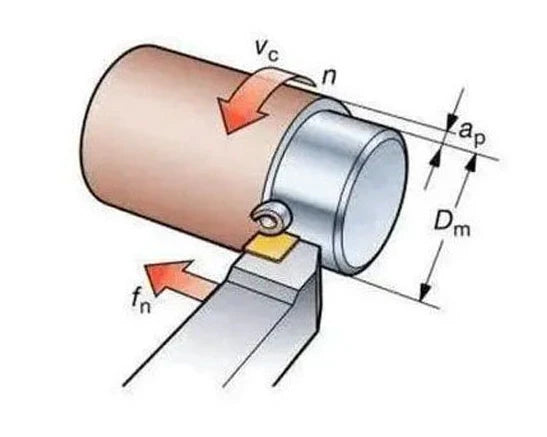
Tungsten carbide is far harder than any tool steel. Because of this extreme hardness, it can cut at very high cutting speeds (Vc) and machine materials that have already been hardened (up to 70 HRC). It needs very rigid CNC machines, because its lack of elasticity makes it prone to chipping from vibration.
← All guides

Related guides
TapsMetric and inch taps: materials, pitch and selection.
DrillsHSS, cobalt and carbide drills for every material.
Lathe Cutting ToolsLathe inserts and tool holders: geometries and selection.
CountersinksChamfer and taper milling cutters.
Basic Cutting TheoryFundamentals of cutting: speeds, feeds and materials.
Machinable Materials (VDI 3323)Classification of workpiece materials per VDI 3323 (P-M-K-N-S-H groups).
[P] - STEELS (STEEL)Group P: steels: cutting characteristics and recommendations.
[M] - STAINLESS STEELS (STAINLESS STEEL)Group M: stainless steels: machining peculiarities.
[K] - CAST IRONGroup K: cast irons: behavior and cutting parameters.
[N] - NON-FERROUS MATERIALS (NON FERROUS)Group N: non-ferrous (aluminium, copper) and their cutting.
[S] - SUPER ALLOYSGroup S: superalloys and titanium: difficult machining.
[H] - HARDENED MATERIALSGroup H: hardened materials: high-hardness cutting.
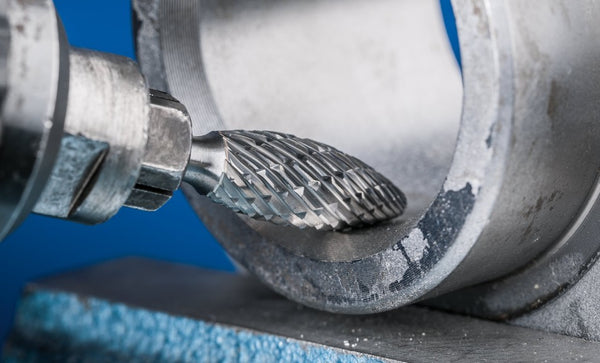
Carbide Rotary Burrs